Tag: uk-politics

  • For the People?: The disparity between politics and the public

    For the People?: The disparity between politics and the public

    Political representation has always been the foundation of modern democracy. In theory there should be a party that represents every base of political thought and belief. However the reality is far from that. Logically no one’s personal political beliefs will align perfectly with any one party. Yet if a large portion of the population do not feel represented by any party, is our democracy flawed?

    In a study before the previous general election in 2023 the organisation, UK In A Changing Europe, found that 31% or nearly a third of the UK public did not feel represented by any party. Those interviewed stated that they felt there was no point in voting, because nothing changes and they belived their vote was not significant.

    Disillusionment between politics and the public creates a rift between the average voter and those chosen to govern the country. If public trust fails to lie in the government, then their power is obselete. That is not to say that this is the case, as it is still a miniority among the British public, however it does bring to light a range of interesting questions about why people feel under represented.

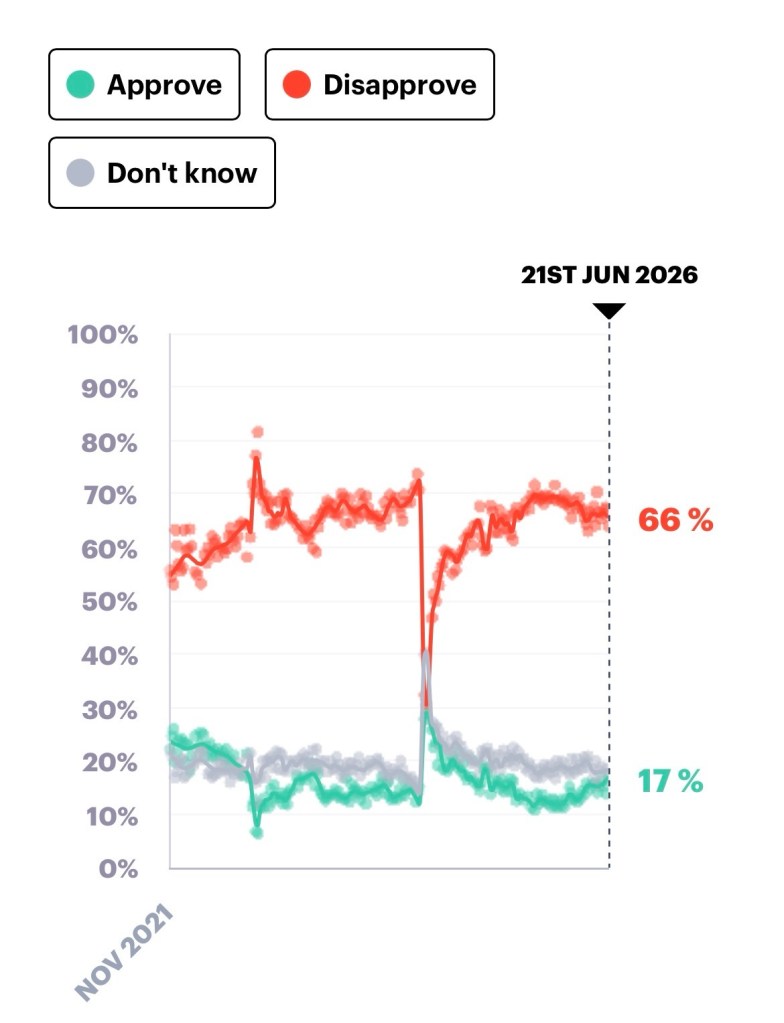
    The trust in democracy and the UK political system itself is still strong, however it is the distrust in politicians that is a large portion of the grievance. The electoral commission in 2024 noted that only 10% of their subjects said they trusted politicians. This result mirrors the growing discontent around the reliability of the UK’s leaders. The connotations of scandals and politicians have become engrained in British Culture, and as it stands to reason, a major factor for why many feel under-represented. These politicians don’t act like them.

    Furthermore the trends of these surveys show that there was a large feeling of no representation among the right of UK politics. This can be explained by the recent rise of far-right parties and ideologies, that claim to represent the marginlised British voters. Therefore if there is a disconnection between the mainstream parties and the electoral base, more extreme or niche parties begin to emerge. They attempt to cater to groups who feel isolated by the establishment.

    This is encapsulated by a study by the electoral commission highlighting a massive disparity in a desire for strong leadership, among conservatives and Reform compared to Labour or Greens. it makes logical sense, therefore that if a government follows a line of policies that do not align with the individual, they will search for alternatives. However, the alternatives may not be any better.

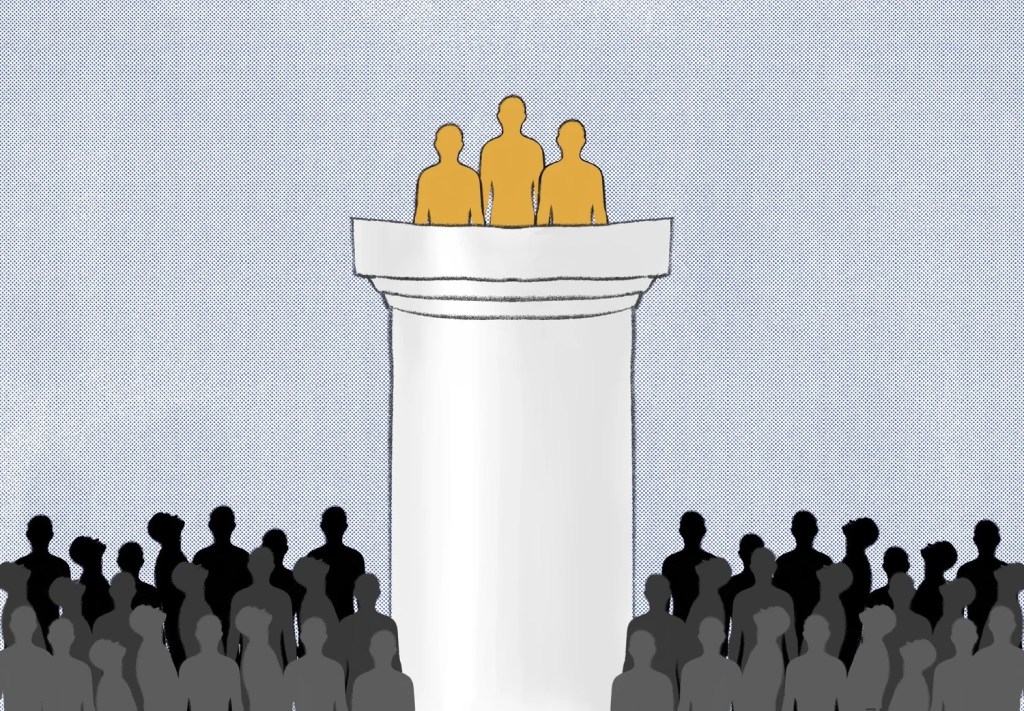
    We cannot know how truly represented people feel in relation to politics, as each individual differs on each individual policy. However there is clearly a division between politicians and the people they represent. These ideas of elitism and being ‘out of touch’ have become synonymous with UK politics. Many feel that politics no longer represents them and that politicians no longer represent the people. It is clear democracy is still intact, yet the division between those in power and those they serve continues to grow.

  • Brexit or Brejoin: The causes, consequences and future of Britain’s relationship with the EU.

    Brexit or Brejoin: The causes, consequences and future of Britain’s relationship with the EU.

    In 2020 Britain left the European Union, and removed itself from the economic and political hub of the European mainland. Brexit itself caused a division within the country, as only 51% had voted to leave in 2016. The propaganda and misinformation that overshadowed the vote, led to a confused and poorly planned election. The effects have been tremendous. Only in hind sight did the British public realise they had been swindled, but why did it happen and what should the future choice be?

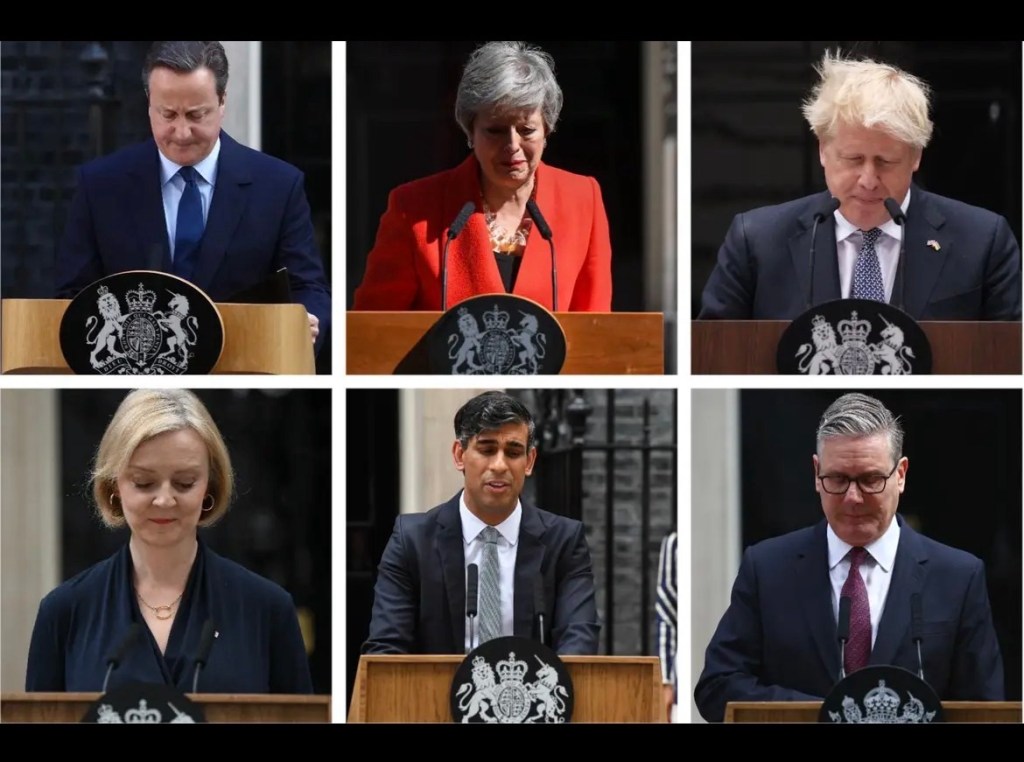
    The two main causes of Brexit were misinformation and the electoral base. Primarily the government and other politicians facilitated the choice in the first place. Prime Minister David Cameron chose to call a vote as he was under political pressure, and he had wildly assumed that the British public were well versed in the complexities of international affairs. They were not. This allowed fearmongering and scapegoating, suggesting that the EU was a direct threat to British Sovereignty and that independence would provide us the tools to improve our economy and reduce immigration. However these were never feasible outcomes.

    On the surface the EU provided trade links and free movement, in exchange for huge fees and detrimental laws. However the intrinsic nature of international communities, is never that simple. Even for those who are well versed in international politics, the EU is a complex and expansive body, not one that can be understood through simplistic terms. Therefore to allow any voter base to tackle such an insurmountable question, was reckless. A choice for which Cameron forever bares the consequences.

    This leads on to the electoral base itself, those who were given the power and responsibility to Influence the future of Britain’s European relationship. The journal ‘Economic Policy’, in 2017, conducted a survey on the demographics of the election from which we base this argument. Those from poorer economic backgrounds with fewer qualifications were more likely to vote leave, influenced by the political propaganda machine. This was founded on the belief that leaving the EU would increase job opportunities and improve the cost of living. Another major demographic group was the elderly, who wished to return to socially conservative values, ones that the EU were modernising against. These were encompassed by the overarching theme of white votes, who the majority of voted to leave.

    These demographic patterns can be summarised by Thomas Sampson, “Voting to leave the European Union was strongly associated with holding socially conservative political beliefs, opposing cosmopolitanism, and thinking life in Britain is getting worse.” (Sampson, Thomas (2017). “Brexit: The Economics of International Disintegration)

    Overall it is clear that a clear association was made between personal and local issues, with a wider European blame. Many of those that did vote leave, either have passed on and cannot experience the consequences, or regret their decision after seeing the negative effects of the Referendum. Yet the question remains, what comes next?

    In recent years, the temptation of re-joining the EU has become increasingly appealing. The benefits of the EU are now more apparent than ever, as we are actively missing out on them. However, the Referendum divided the country, and no Prime minister or Government would willingly re-join without the political benefits of doing so. Although it would be divisive even today, it would be a fairly easy endeavour to take our place back in the international community.

    The conversation around the descent into federalism, and the potential loss of Sovereignty, takes away from the truth of the situation. We as a nation made a mistake. Could we have done it differently? Absolutely. Yet the past is the past and we must progress nonetheless. The EU will never take our culture nor our independence, and it is time that Britain realises that it is no longer an empire and does in fact need allies. For the benefit of all her citizens and for the rest of Europe.

  • Politics by the people, for the people: Has ‘First Past the Post ‘voting become outdated?

    Politics by the people, for the people: Has ‘First Past the Post ‘voting become outdated?

    The current UK political system has been in place since the 1950s, and the voting method, namely First-Past-the-Post, has been a focus of conversation for years. Voters, on Election Day, choose an MP to represent their constituency within parliament, however the total number of MP’s country wide determines the election winner. This creates a problem, where people either vote for their favorite party at the cost of a poor MP, or vote for their favorite MP at the cost of their desired government.

    This has led to outcomes, where a party can receive the majority of national votes, but not win the election overall. First-Past-the-Post has therefore become a subject of debate, with the alternative option of Representative voting has garnered support.

    Proportional Representative voting, means that if a party won 40% of the votes they would then be allocated 40% of the governmental seats. This to many people, seems like the fairer and more accurate display of the national voting intention. However it comes with downsides as well. Proportional voting would allow voters from the other side of the country to influence your local MPs and vice versa.

    Either method of election has both pros and cons, and each can be argued for in turn. Yet as the current system stands First-Past-the-Post does work, and has done so for a long time. It is a personal question as to which would be more efficient in deciding the country’s government.

  • Rise of Reform UK: The breeding ground of divisive populism

    Rise of Reform UK: The breeding ground of divisive populism

    The best way to categorise how reform has garnered such a large and devoted support base is through the lens of populism. Various scholars, such as Ernesto Laclau, and Cas Mudde, set out a list of requirements that Reform encapsulates.

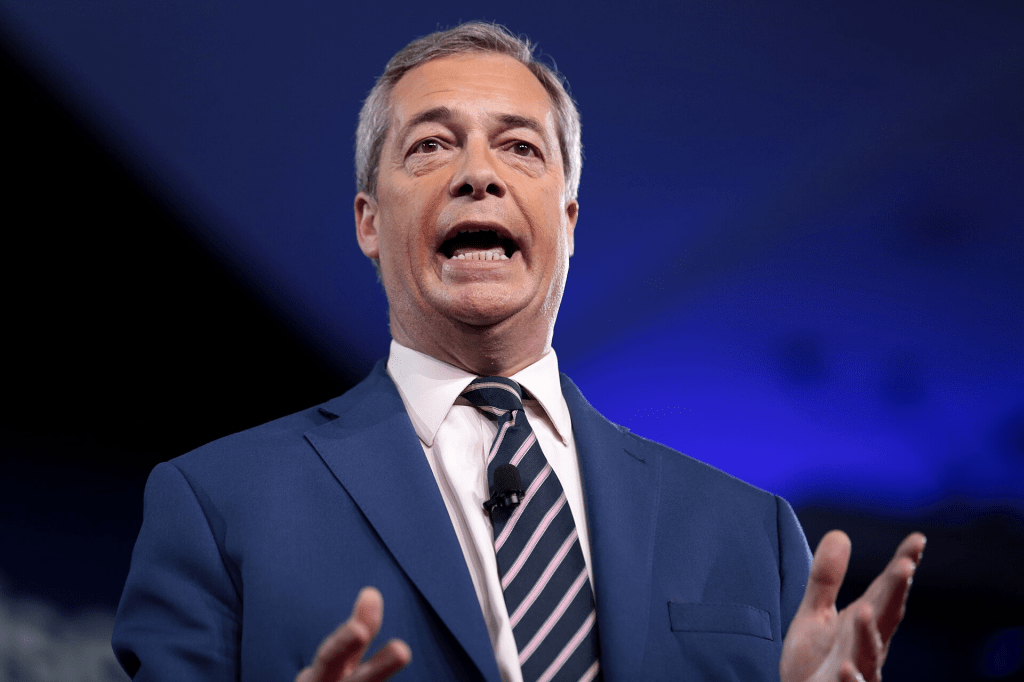
    Firstly, populists attempt to define a homogeneous body, who are the true people of that country, what their culture is, and what they look like. In Reform’s case, this is white British nationals, especially the working class. Secondly, Populism is anti-establishmentarian, moving away from the status quo of usual politics, offering a new pathway to successful representation. Reform epitomises this technique, critiquing the two-party dominance of Labour and the Conservatives. Finally, it requires a charismatic leader, who, for Reform, is Nigel Farage. These factors are the foundation for a successful populist party.

    Reform UK is by definition a populist party, claiming to represent the true popular will of the people, against the government that no longer represents the public. The environmental conditions of UK politics have opened the floodgates for parties like Reform to appeal to the previously secure support bases of other parties. Poor economic conditions, scandals and wars have ruined public trust in politics, and thus a new divisive party becomes very appealing.

    Image: Member of the European Parliament Nigel Farage speaking at the 2017 Conservative Political Action Conference (CPAC) in National Harbour, Maryland taken by Gage Skidmore. https://commons.wikimedia.org/wiki/File:Nigel_Farage_(33149364955).jpg

    Populism as a political methodology has existed for a long time; in recent years, especially with the emergence of social media, it has become more prominent in modern politics. Figures like Farage and Trump use tactics to divide political landscapes, in turn rendering support for their party and discrediting their opponents.

    Reform’s popularity is owed to its method of politics, polarised and divisive, accumulating a wide base of popular support merely from being different. This is not to say that Reform are the only UK populist party, the Green party could also be considered as such. However, Reform’s rhetoric is extremely harmful both to UK politics and to a large number of people who do not fit into their ‘perfect’ Britain.

  • Personal Politics: the emotional response to political choice

    Personal Politics: the emotional response to political choice

    In recent years especially with the rise of social media, Individual political opinions have become intertwined with one’s character. By aligning yourself with a political party, in today’s world, means to associate your core morals with that of the party itself. In many ways this removes the subjectivity of politics, and makes voting an extremely personal thing.

    The true primary reason for the personification of political views is divisive and polarised politics. The more extreme or unorthodox the party, the more debate and division ensues. In UK politics, for example, the recent local council elections saw an abandonment of the traditional two parties, in favour of the more radical Reform UK and the Green Party. This is due to the current state of the system, and the dissatisfaction and discontent with current politics. In short the people feel underrepresented and thus over represent themselves.

    Personal politics through social media

    The personalisation of politics is not exactly a new phenomenon and has been shown throughout history in movements such as the suffragettes. Where politics was an extremely personal matter, one that could provide them the opportunity that the current system did not. As beneficial as it can be, it equally can be destructive, especially among friends and family. The politics itself is divisive and embodying such sentiments often leads to conflict.

    So why does it matter? Politics is an individual right, if you are a citizen and over the age of 18, you have the right to decide who governs our country. That is real power. Voting and holding the government accountable is the foundation of modern democracy, a choice that is always personal. Yet in the time of constant media updates and conversation , it’s no longer personal. It is a reflection of yourself. The new world politics will continue to be over emotional issues and personified, and the world changes with it, but perhaps it’s equally okay to take it subjectively, that maybe the party and the people are not one entity.