Tag: trump

  • Performative Politics: Trump’s pageantry in office.

    Performative Politics: Trump’s pageantry in office.

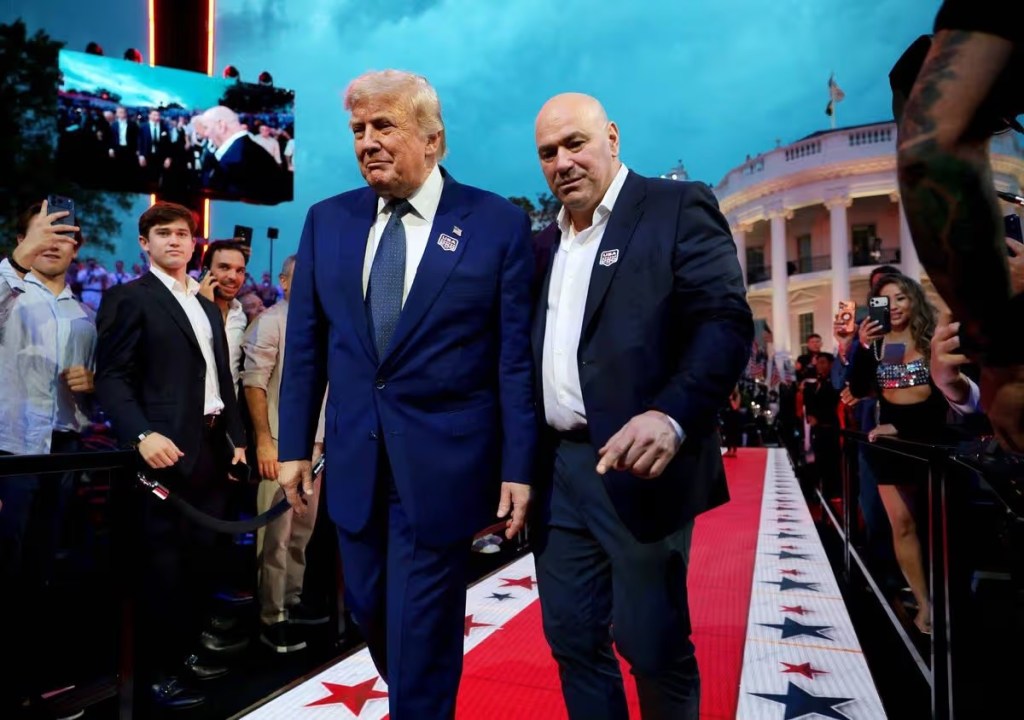
    Yesterday the UFC held its 250th event at the white house, to commemorate 250 years since the founding of America, but also for Donald Trump’s birthday. It is not uncommon to see leaders of the world hold events in celebration of history and great achievements. However the celebration of one’s own birthday, partially funded by taxpayers money, is more akin to North Korea and Kim Jong Un .

    Trump is well known around the world as a divisive figure, constantly poking the boundaries of what he feasibly can get away with. However beyond the actual policies of his government, to which I shall not comment, there appears a peculiar case of pageantry. This is highlighted by the recent UFC event.

    By covering Trump for his recent term, many small factors have to come to light that appear closer to personal narcissism. The huge events, the parades, the statues, the name changes. They all are done with Trump’s image in mind. For him he wishes to represent himself as not just the president, but the best president to ever hold office.

    Although this is seperate from actual policy making, it does still hold infulence. Trump’s obsession with appearance bleeds into his decision making. Tariffs, international bullying and his attacking tweets. All of these are factors of strong manning, where an individual attempts to appear more masculine to force through ideas or plans.

    In many cases, alot of Trump’s policies rely on appearing successful rather than actually working. Short term success in all of his plans is key, which can be paraded around and weaponised against doubters. The Executive orders are the primary example. Signing his name on a piece of paper, as if that can instantly change the functionality of society. They appear as instant success and progress, yet the reality is very different.

    Many of his orders do not actually get implemented. They are either too ambitious, blocked by congress or just downright irresponsibly daft. Yet they appear to be instant and effective.

    Trump’s personality and ambition pools into a giant performance. Similiar to Stalin’s Gigantomania, and love all things superfluously large, Trump is all about the bigger, the better. As well all know, the bigger something appears, the weaker the foundations truly are.

    Therefore the UFC event, which has caused alot of outrage due to it’s public display of wealth and elitism, is but a symptom of a larger issue. Trump performs his position, and often tends to exaggerate many of his statements. Creating uncertainty around if he should be in the most powerful position in the world.
  • Stigma around politics: Why marginalising the Far-Right increases extremism

    Stigma around politics: Why marginalising the Far-Right increases extremism

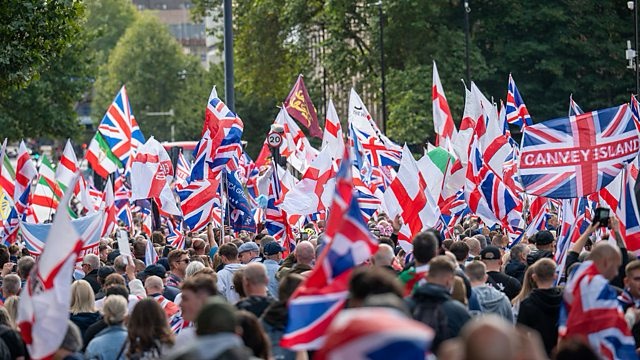
    Recently there was another Tommy Robinson led anti-immigration march in the UK. What banner they say they march under, is very different from the reality of the protest. The supporters of Robinson, and other Far-Right figures, all have different motivations and reasons for going to such an event. The issue is, not what these supporters say or advocate, but the responses to this. Which the majority of the time is negative and demeaning.

    The point of this article is to express that Far-Right beliefs have always exsisted in a miniority, yet the reason they become mainstream sources are because of societies’ marganlisation of their views.

    A range of views became apparent within these groups, some believe immigration is draining the economy, some believe that politicians have let them down, and some are indeed racist. The question arises, how can such a diverse collection of ideas all accumulate into hate towards immigrants? and by condmening and isolating these people, will it change their attitiude towards extreme beliefs?

    The underlying reasoning plays a large part in attempting to answer these questions, and to an extent some overgeneralisations must be made to supplement the argument. These factors include, under education, poor economic backgrounds, cultural and family traditions and misinformation. These factors all feed into the support base for the Far-Right, positioning a singular and relatively minor problem, as the sole cause of all their personal issues.

    Yet how can those who are educated, judge others who are not so? The ability to make sound and reasonable political judgement stems from research, education and interaction with opposing beliefs. Many people have not been provided such a privilege. Therefore they are susceptible to misinformantion, fearmongering and the attractiveness of hate.

    In my opinon, the followers of Far-Right doctrine are for the most part normal people, who have been abandonded by the system, destined to shift towards extremism. That is not to say that evil does not exist within these groups, but those who are there, in regard for personal reasons, should not be shunned by society.

    They do not know any better.

    It is for this reason, that I believe that the stigma against Far-Right supporters, pushes them further into extremism. When faced with a group that provides them answers, and a group that blames them for their circumstances, it becomes clear how extreme views garner mainstream support.

    The solution is simple; empathy. Not to judge by their words, but to try and think how they think, to understand why they say what they say. Only then can we begin to re-educate, to teach others, and to rebuild a truly United Kingdom. Isolating a volatile and abandoned group, makes them only more volatile and abandoned. The solution to ending Far-Right extremism, is to see them as people.