Tag: philosophy

  • Fear Sells: The monopolisation of fear in the modern media

    Fear Sells: The monopolisation of fear in the modern media

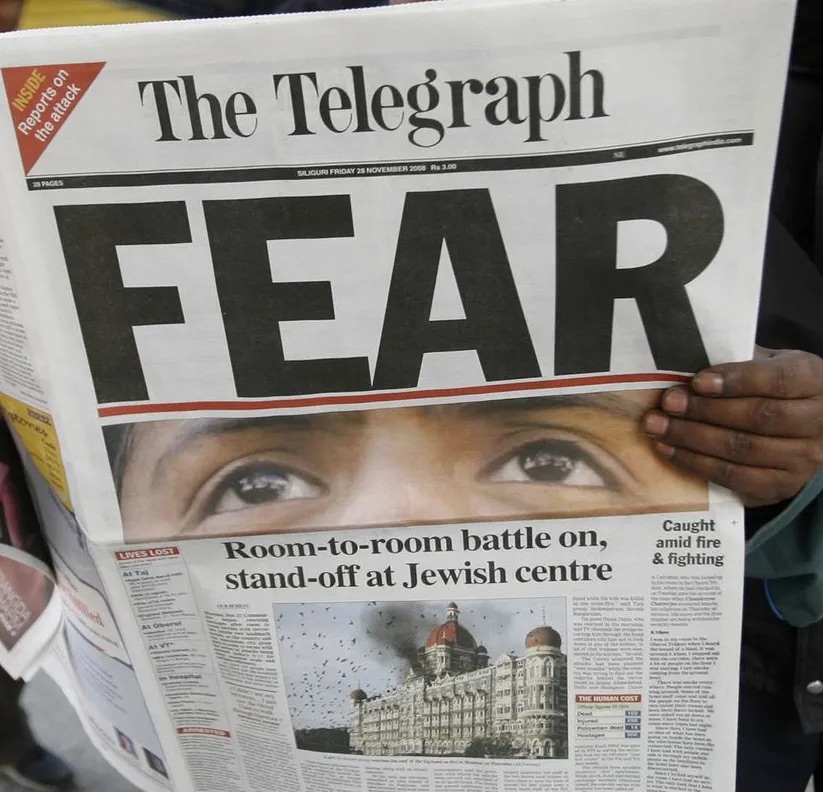
    Since the start of newspapers in the 17th century, news has become a staple of modern life. Always connected, always informed. The difference today is speed, for which we can access global news within a click of a button. We can see the wars across the globe, the constant pandemics and peril that faces humanity. Yet why is it always so bleak? The answer, as do most things, lies in money.

    For the media, money is the sole purpose. It is no different from any other large conglomerate and therefore should not be seen any differently. People wish to be informed on the world’s events and will always interact with news. However fear exponentially increases engagement, and engagement provides money.

    The Media itself has never changed, creating a sense of panic has always created greater interest. Yet the modern forms of media, provided by the internet, allows for 24/7 coverage. The wave of impending bad news never ends, nor does the interest.

    In recent years this has become more apparent as a method of sustainability for the media. More and more of the public have become disillusioned with how the Media represents itself and it’s underlying motivations. The active choice to cover some stories while avoiding others has put the Media in hot water. Therefore with a declining support base, fear is the one factor that keeps them afloat.

    The stories of joy, hope and human resilience are present, they do well in the court of public opinion. But, too much positivity becomes obsolete compared to the engagement of anxiety. Therefore, the majority of stories are on war, famine and the never ending cycle of political scandals. That is what sells best.

    This constant barrage of negativity is extremely draining, for all those who read the news regularly. Trump with another pointless war threat, the cost of living in the UK, murders, poverty, terror attacks, genocide. However its equally addicting. To stay connected is to be present, to be a member of the human race, and to know of the world is the purest form of social connectivity.

    Perhaps the news should focus on the positive events of the world. But it would not be as profitable for those who own the Media, so will never come to fruition.

    My belief is that the Media, is extremely beneficial for it’s role. To educate, to connect and to inform. But it does not represent the world. It shows a dangerous and divided globe, one of pain and struggle. Reality is far more diverse. There is happiness, love and empathy beyond the fearmongering of the papers. Therefore the Media profits from fear, and we the people can profit by taking news as what it is. A business.

  • Stigma around politics: Why marginalising the Far-Right increases extremism

    Stigma around politics: Why marginalising the Far-Right increases extremism

    Recently there was another Tommy Robinson led anti-immigration march in the UK. What banner they say they march under, is very different from the reality of the protest. The supporters of Robinson, and other Far-Right figures, all have different motivations and reasons for going to such an event. The issue is, not what these supporters say or advocate, but the responses to this. Which the majority of the time is negative and demeaning.

    The point of this article is to express that Far-Right beliefs have always exsisted in a miniority, yet the reason they become mainstream sources are because of societies’ marganlisation of their views.

    A range of views became apparent within these groups, some believe immigration is draining the economy, some believe that politicians have let them down, and some are indeed racist. The question arises, how can such a diverse collection of ideas all accumulate into hate towards immigrants? and by condmening and isolating these people, will it change their attitiude towards extreme beliefs?

    The underlying reasoning plays a large part in attempting to answer these questions, and to an extent some overgeneralisations must be made to supplement the argument. These factors include, under education, poor economic backgrounds, cultural and family traditions and misinformation. These factors all feed into the support base for the Far-Right, positioning a singular and relatively minor problem, as the sole cause of all their personal issues.

    Yet how can those who are educated, judge others who are not so? The ability to make sound and reasonable political judgement stems from research, education and interaction with opposing beliefs. Many people have not been provided such a privilege. Therefore they are susceptible to misinformantion, fearmongering and the attractiveness of hate.

    In my opinon, the followers of Far-Right doctrine are for the most part normal people, who have been abandonded by the system, destined to shift towards extremism. That is not to say that evil does not exist within these groups, but those who are there, in regard for personal reasons, should not be shunned by society.

    They do not know any better.

    It is for this reason, that I believe that the stigma against Far-Right supporters, pushes them further into extremism. When faced with a group that provides them answers, and a group that blames them for their circumstances, it becomes clear how extreme views garner mainstream support.

    The solution is simple; empathy. Not to judge by their words, but to try and think how they think, to understand why they say what they say. Only then can we begin to re-educate, to teach others, and to rebuild a truly United Kingdom. Isolating a volatile and abandoned group, makes them only more volatile and abandoned. The solution to ending Far-Right extremism, is to see them as people.