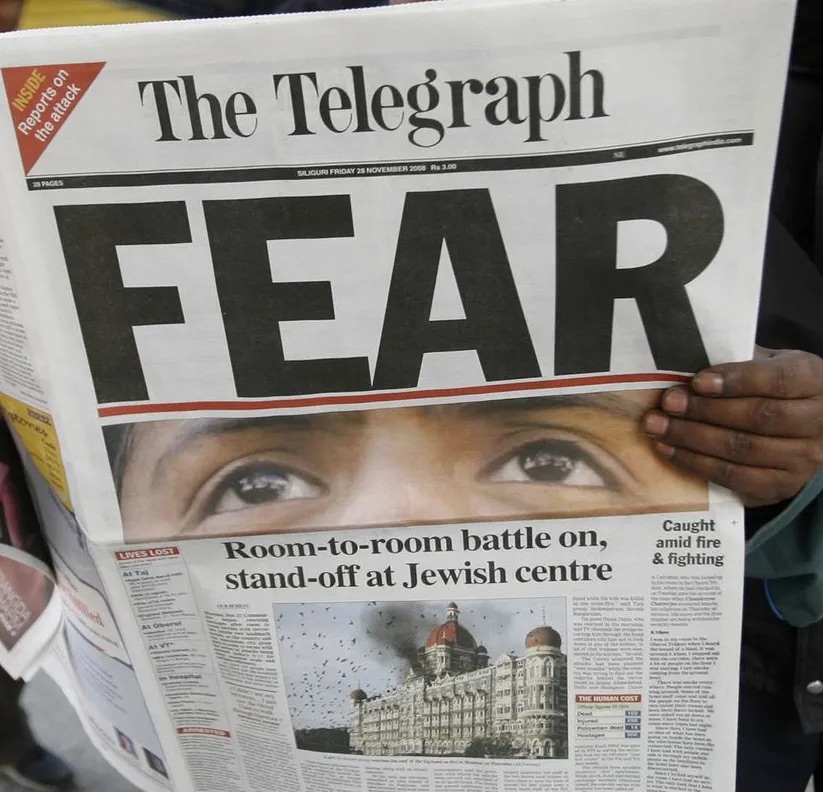
Since the start of newspapers in the 17th century, news has become a staple of modern life. Always connected, always informed. The difference today is speed, for which we can access global news within a click of a button. We can see the wars across the globe, the constant pandemics and peril that faces humanity. Yet why is it always so bleak? The answer, as do most things, lies in money.
For the media, money is the sole purpose. It is no different from any other large conglomerate and therefore should not be seen any differently. People wish to be informed on the world’s events and will always interact with news. However fear exponentially increases engagement, and engagement provides money.
The Media itself has never changed, creating a sense of panic has always created greater interest. Yet the modern forms of media, provided by the internet, allows for 24/7 coverage. The wave of impending bad news never ends, nor does the interest.
In recent years this has become more apparent as a method of sustainability for the media. More and more of the public have become disillusioned with how the Media represents itself and it’s underlying motivations. The active choice to cover some stories while avoiding others has put the Media in hot water. Therefore with a declining support base, fear is the one factor that keeps them afloat.
The stories of joy, hope and human resilience are present, they do well in the court of public opinion. But, too much positivity becomes obsolete compared to the engagement of anxiety. Therefore, the majority of stories are on war, famine and the never ending cycle of political scandals. That is what sells best.
This constant barrage of negativity is extremely draining, for all those who read the news regularly. Trump with another pointless war threat, the cost of living in the UK, murders, poverty, terror attacks, genocide. However its equally addicting. To stay connected is to be present, to be a member of the human race, and to know of the world is the purest form of social connectivity.
Perhaps the news should focus on the positive events of the world. But it would not be as profitable for those who own the Media, so will never come to fruition.
My belief is that the Media, is extremely beneficial for it’s role. To educate, to connect and to inform. But it does not represent the world. It shows a dangerous and divided globe, one of pain and struggle. Reality is far more diverse. There is happiness, love and empathy beyond the fearmongering of the papers. Therefore the Media profits from fear, and we the people can profit by taking news as what it is. A business.


 Common Sense Journalism