Tag: history

  • To house the people: The real issues behind the growing housing crisis.

    To house the people: The real issues behind the growing housing crisis.

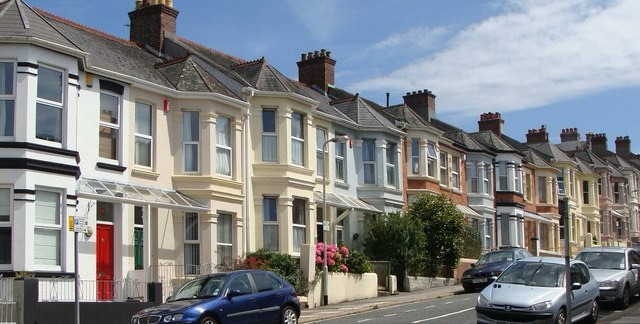
    Affordability is a major source of debate among the echelons of UK society as of late, and in many ways it may be the the most pressing. The cost of living, accelerated by the fragile state of the world, has led to the ‘basics’ becoming unaffordable for a large number of people. Among food, water and shelter, housing appears to have the largest divide between asking price and the quality of the home. In short there is a housing crisis.

    However the question remains, what is the source of this issue? Can it be purely put down to the economic uncertainty of the world? Or perhaps as Mr Farage states the consequence of uncontrolled immigration? Well the answer may lie in the simplicity of supply and demand.

    According to the Centre for Policy Studies, the housing shortage is the worst in Europe, with only 440 homes per 1000 people. In order to remedy these issues and reinstate an equilibrium in the housing market, it is suggested that over 5.8 million homes would need to be built. This study concluded that the reason for this was primarily underbuilding, which can appear a confusing statement. For if there is such a desire for new homes, why do companies refuse to build more?

    Firstly it should be stated that the reason housing is unaffordable is due to the lack of new homes in itself, the less the amount the greater the price. Furthermore, although immigration, landlords, lower real wages and lack of labour do play a role in the crisis, it is nothing compared to the need for new houses.

    A large issue within the industry is companies buying up land, applying for planning permission and selling it on for profit. Therefore it can be more profitable to not build houses on land and instead horde it. Known as ‘Land banking’ the sale and resale of undeveloped land creates a vicious cycle where no new houses are built. The four biggest names in the industry: Berkeley, Barratt, Persimmon and Taylor, account for more than 450,000 of the 600,000 vacant plots. This made over 1.5 billion for their shareholders. (Source: Guardian article by Oliver Wainwright).

    Each year it becomes more and more prevalent, as house prices continue to increase, as construction fails to match demand. Again the British public fall victim to the corporate greed that darkens our country. But in order to truly change the landscape of the housing crisis, to put it simply more homes need to be built. This cannot happen without intervention.

    If the government chose to interfere on behalf of the public, and raise the tax on land banking, then perhaps we would see a shift in the market. Were the capitalists incentivised to produce new homes with a greater profit than that of preventing construction, then a new age would surely dawn for affordable housing. As of now, nothing has changed and housing will increasingly become unaffordable unless something can be done.

  • The satirisation of British politics: Does humour benefit our elections?

    The satirisation of British politics: Does humour benefit our elections?

    Satire has been a major aspect of modern british politics ever since the 17th century, with satirical cartoons and books. In the 1960s it exploded through the medium of television, and since has become a landmark of our political scene. Undoubtedly it has its benefits in exposing and keeping our politicans in check, but does it have any real benefits in terms of political decisions, or are we the laughing stock of modern democracy?

    Satrical comedy itself is a major form of political criticism, but with the rise of ‘joke’ candidates, running for both council and general elections, the idea of satirical figures has become a point of discussion. The most recent example is of course Count Binface, a man dressed as a bin. At first sight it is a mockery of the state of our politics, where a bin can run for an elected position. However it is far more important to the nature of Britain than it first appears.

    Recently in a manoeuvre to avoid the consequences of a parlimentary probe into his undisclosed donations, Nigel Farage resigned his seat as MP for Clacton-on-sea. In his words he described the by-election as ‘the people versus the establishment’, an attempt to bypass a potential suspension and regain the trust of his constiuents. Yet, the other major parties refused to be drawn into his escapade.

    Therefore with Farage running for a seat, against no real candidates, the satirical figures of British politics emerged to fight back. Figures like Count Binface and The human fox as well as the Monster Raving Loony Party are all set to stand against Farage in the upcoming election. As a result Farage has been put in a position where even winning would damage his reputation.

    Therefore the question comes to light, is this a good thing for our politics? Well either argument has a valid basis, whether you believe that politicans who wish to make a mockery of the institutions of government should be held accountable, or if politics should remain a serious and respected aspect of our country.

    However, it is clear that politics has become a very toxic point of discussion as division over alignment becomes more paramount. Perhaps adding humour to a sometimes dire or distressing state of the world, brings back some joy to a serious occasion.

    Furthermore, although these figures are running mostly to take the spotlight away from Farage, and to question the legitmacy of many of the grey areas within politics, it is apparent that some of them are not as unserious as they seem. Count Binface for example, aka Jonathan Harvey, is a political comedian who studied at oxford university, and has highlighted his wit and nuance through interviews. Therefore, he is not just a source of humour in this election, but a serious pointer to the issues we face in our current time.

    If a man dressed as a bin can sound more appealing than a serious political figure, is it time to start addressing the reasons why?

  • For the People?: The disparity between politics and the public

    For the People?: The disparity between politics and the public

    Political representation has always been the foundation of modern democracy. In theory there should be a party that represents every base of political thought and belief. However the reality is far from that. Logically no one’s personal political beliefs will align perfectly with any one party. Yet if a large portion of the population do not feel represented by any party, is our democracy flawed?

    In a study before the previous general election in 2023 the organisation, UK In A Changing Europe, found that 31% or nearly a third of the UK public did not feel represented by any party. Those interviewed stated that they felt there was no point in voting, because nothing changes and they belived their vote was not significant.

    Disillusionment between politics and the public creates a rift between the average voter and those chosen to govern the country. If public trust fails to lie in the government, then their power is obselete. That is not to say that this is the case, as it is still a miniority among the British public, however it does bring to light a range of interesting questions about why people feel under represented.

    The trust in democracy and the UK political system itself is still strong, however it is the distrust in politicians that is a large portion of the grievance. The electoral commission in 2024 noted that only 10% of their subjects said they trusted politicians. This result mirrors the growing discontent around the reliability of the UK’s leaders. The connotations of scandals and politicians have become engrained in British Culture, and as it stands to reason, a major factor for why many feel under-represented. These politicians don’t act like them.

    Furthermore the trends of these surveys show that there was a large feeling of no representation among the right of UK politics. This can be explained by the recent rise of far-right parties and ideologies, that claim to represent the marginlised British voters. Therefore if there is a disconnection between the mainstream parties and the electoral base, more extreme or niche parties begin to emerge. They attempt to cater to groups who feel isolated by the establishment.

    This is encapsulated by a study by the electoral commission highlighting a massive disparity in a desire for strong leadership, among conservatives and Reform compared to Labour or Greens. it makes logical sense, therefore that if a government follows a line of policies that do not align with the individual, they will search for alternatives. However, the alternatives may not be any better.

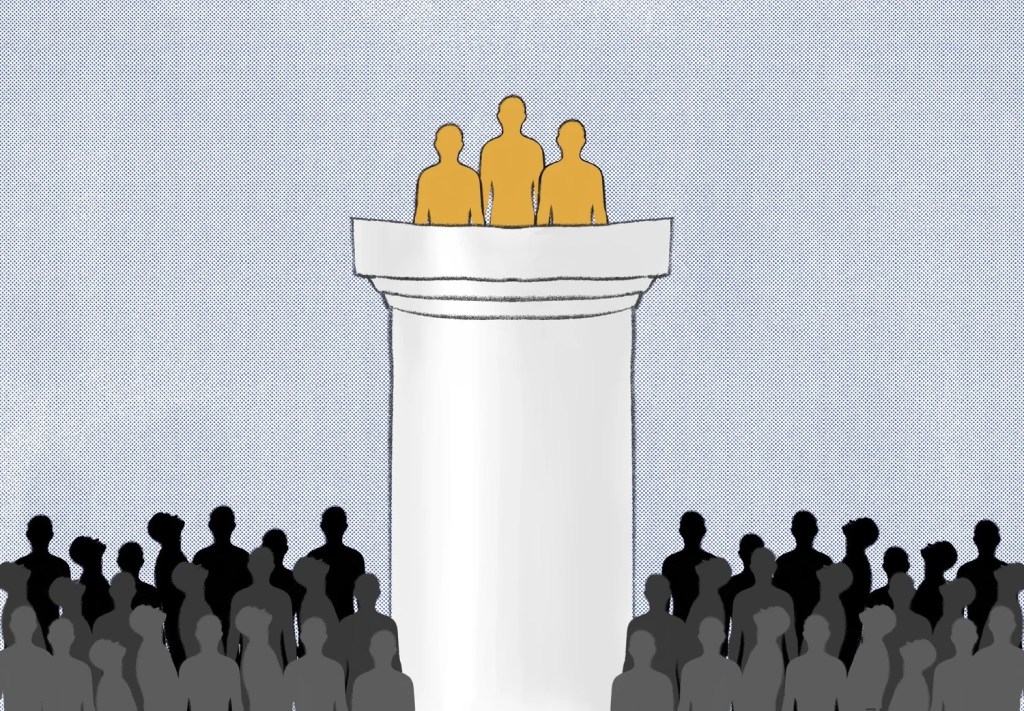
    We cannot know how truly represented people feel in relation to politics, as each individual differs on each individual policy. However there is clearly a division between politicians and the people they represent. These ideas of elitism and being ‘out of touch’ have become synonymous with UK politics. Many feel that politics no longer represents them and that politicians no longer represent the people. It is clear democracy is still intact, yet the division between those in power and those they serve continues to grow.

  • Personal Politics: the emotional response to political choice

    Personal Politics: the emotional response to political choice

    In recent years especially with the rise of social media, Individual political opinions have become intertwined with one’s character. By aligning yourself with a political party, in today’s world, means to associate your core morals with that of the party itself. In many ways this removes the subjectivity of politics, and makes voting an extremely personal thing.

    The true primary reason for the personification of political views is divisive and polarised politics. The more extreme or unorthodox the party, the more debate and division ensues. In UK politics, for example, the recent local council elections saw an abandonment of the traditional two parties, in favour of the more radical Reform UK and the Green Party. This is due to the current state of the system, and the dissatisfaction and discontent with current politics. In short the people feel underrepresented and thus over represent themselves.

    Personal politics through social media

    The personalisation of politics is not exactly a new phenomenon and has been shown throughout history in movements such as the suffragettes. Where politics was an extremely personal matter, one that could provide them the opportunity that the current system did not. As beneficial as it can be, it equally can be destructive, especially among friends and family. The politics itself is divisive and embodying such sentiments often leads to conflict.

    So why does it matter? Politics is an individual right, if you are a citizen and over the age of 18, you have the right to decide who governs our country. That is real power. Voting and holding the government accountable is the foundation of modern democracy, a choice that is always personal. Yet in the time of constant media updates and conversation , it’s no longer personal. It is a reflection of yourself. The new world politics will continue to be over emotional issues and personified, and the world changes with it, but perhaps it’s equally okay to take it subjectively, that maybe the party and the people are not one entity.