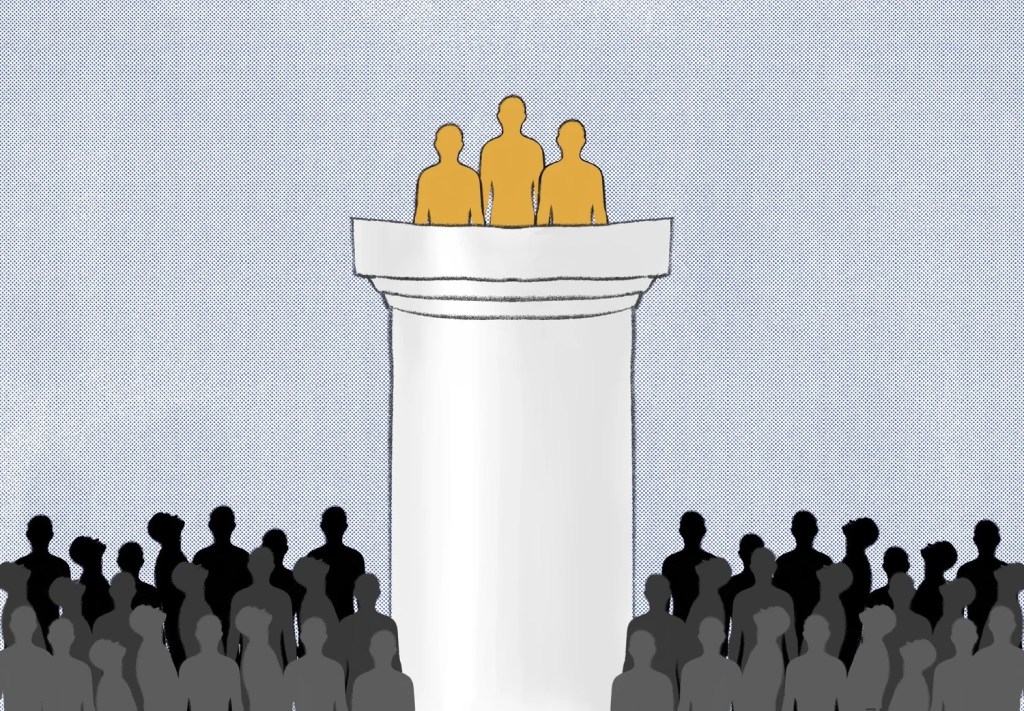
Political representation has always been the foundation of modern democracy. In theory there should be a party that represents every base of political thought and belief. However the reality is far from that. Logically no one’s personal political beliefs will align perfectly with any one party. Yet if a large portion of the population do not feel represented by any party, is our democracy flawed?
In a study before the previous general election in 2023 the organisation, UK In A Changing Europe, found that 31% or nearly a third of the UK public did not feel represented by any party. Those interviewed stated that they felt there was no point in voting, because nothing changes and they belived their vote was not significant.
Disillusionment between politics and the public creates a rift between the average voter and those chosen to govern the country. If public trust fails to lie in the government, then their power is obselete. That is not to say that this is the case, as it is still a miniority among the British public, however it does bring to light a range of interesting questions about why people feel under represented.
The trust in democracy and the UK political system itself is still strong, however it is the distrust in politicians that is a large portion of the grievance. The electoral commission in 2024 noted that only 10% of their subjects said they trusted politicians. This result mirrors the growing discontent around the reliability of the UK’s leaders. The connotations of scandals and politicians have become engrained in British Culture, and as it stands to reason, a major factor for why many feel under-represented. These politicians don’t act like them.
Furthermore the trends of these surveys show that there was a large feeling of no representation among the right of UK politics. This can be explained by the recent rise of far-right parties and ideologies, that claim to represent the marginlised British voters. Therefore if there is a disconnection between the mainstream parties and the electoral base, more extreme or niche parties begin to emerge. They attempt to cater to groups who feel isolated by the establishment.
This is encapsulated by a study by the electoral commission highlighting a massive disparity in a desire for strong leadership, among conservatives and Reform compared to Labour or Greens. it makes logical sense, therefore that if a government follows a line of policies that do not align with the individual, they will search for alternatives. However, the alternatives may not be any better.
We cannot know how truly represented people feel in relation to politics, as each individual differs on each individual policy. However there is clearly a division between politicians and the people they represent. These ideas of elitism and being ‘out of touch’ have become synonymous with UK politics. Many feel that politics no longer represents them and that politicians no longer represent the people. It is clear democracy is still intact, yet the division between those in power and those they serve continues to grow.

